

Where Namibia Stands on Crypto in 2026
Cryptocurrency is no longer an unregulated grey area in Namibia. Bitcoin and other virtual assets can be owned and traded, but they are not legal tender — and companies offering crypto services in Namibia now fall under the supervision of the Bank of Namibia.
Namibia's position on cryptocurrency in 2026 is more nuanced than simply being "for" or "against" crypto.
The country has not banned Bitcoin. It has also not followed countries that have attempted to recognise cryptocurrency as official money.
Instead, Namibia has chosen a middle path:
- individuals can own and trade virtual assets;
- businesses providing virtual-asset services must operate within a regulatory framework;
- the Bank of Namibia regulates Virtual Asset Service Providers;
- cryptocurrency is not legal tender; and
- merchants and customers may voluntarily agree to transact using crypto.
For Namibians interested in Bitcoin, Ethereum, stablecoins or the wider crypto market, the more difficult question in 2026 is often not whether crypto itself is legal.
It is how to move money safely between a Namibian bank account and the crypto ecosystem.
Is cryptocurrency legal in Namibia?
Yes.
Owning Bitcoin or another cryptocurrency for your own account is not prohibited in Namibia.
The Bank of Namibia's public guidance distinguishes between an individual buying or selling virtual assets for themselves and a business providing virtual-asset services to customers.
A person buying Bitcoin as an investment is therefore in a very different regulatory position from a company operating a crypto exchange, custody service or brokerage.
The latter may require authorisation from the Bank of Namibia under the country's virtual-asset legislation.
But Bitcoin is not legal tender
This is probably the most important distinction to understand.
Bitcoin, Ethereum, USDT and other cryptocurrencies are not legal tender in Namibia.
The Bank of Namibia made this explicit when the Virtual Assets Act came into operation.
The Namibia Dollar remains the country's official currency, while the South African Rand also has legal-tender status in Namibia through the country's monetary arrangements.
Crypto does not have the same status.
This means you cannot walk into a shop, owe N$500 and legally insist that the merchant accept N$500 worth of Bitcoin.
Can Namibian businesses accept crypto?
Yes — if both parties agree.
The Bank of Namibia has stated that the acceptance of virtual currencies for goods and services can take place at the discretion of a willing merchant and buyer.
In practical terms, a hotel, software company, online store or consultant could agree to accept Bitcoin or another virtual asset from a customer.
But neither the merchant nor the customer is legally compelled to use cryptocurrency.
Crypto can therefore be used as an agreed form of payment without becoming legal tender.
The big change came in 2023
Namibia's approach to crypto changed substantially with the introduction of the Virtual Assets Act, 2023.
The Act became operational on 25 July 2023 and created Namibia's first dedicated framework for regulating Virtual Asset Service Providers, commonly referred to as VASPs.
The Bank of Namibia was designated as the prudential regulator responsible for licensing, regulating and supervising the industry.
Before this, much of Namibia's official discussion around cryptocurrency focused on the risks associated with an essentially unregulated market.
The Virtual Assets Act represented an important change in philosophy.
Namibia was no longer simply warning people about cryptocurrency.
It was creating rules for companies that wanted to build businesses around it.
What exactly is a VASP?
A Virtual Asset Service Provider is generally a company or person that provides crypto-related services to other people as a business.
This can include activities such as:
- exchanging Namibia Dollars or other fiat currencies for cryptocurrency;
- converting cryptocurrency back into conventional currency;
- exchanging one virtual asset for another;
- operating a virtual-asset marketplace;
- transferring virtual assets on behalf of customers; and
- providing certain custody or wallet services.
Namibia's regulations go considerably further than simply requiring an exchange to fill in a registration form.
The Bank of Namibia has issued rules covering areas such as capital requirements, client-asset custody, cybersecurity, risk management, disclosures, advertising and statutory reporting.
The objective is essentially to bring businesses dealing with crypto customers inside a formal financial regulatory perimeter.
Are there any Namibian crypto exchanges?
This is where the situation becomes more complicated.
In January 2025, the Bank of Namibia announced that it had granted provisional authorisation to two prospective Virtual Asset Service Providers:
- Mindex Virtual Asset Exchange (Pty) Ltd; and
- Landifa Bitcoin Trade CC.
However, provisional authorisation was specifically not the same thing as a full operating licence.
BoN explained that the companies had to satisfy a series of pre-authorisation conditions before receiving full operational approval.
During the provisional phase, they were not permitted to conduct business with the Namibian public.
In August 2025, The Namibian reported that BoN was still conducting due diligence and that extensions had been granted to some of the provisional authorisations.
Mindex's own website currently describes its Namibian operation as holding a "licence-in-principle" and being supervised by the Bank of Namibia.
As of 7 August 2026, however, we could not identify a subsequent public Bank of Namibia announcement clearly stating that either Mindex or Landifa had received a full operational VASP licence.
So which exchanges do Namibians actually use?
There are no reliable public statistics showing the market share of crypto exchanges among Namibian residents.
What is clear from local community discussions and the wider southern African crypto market is that Namibians frequently look beyond Namibia for crypto trading services.
Platforms that commonly appear in discussions include Binance, AltCoinTrader, VALR and historically Luno, alongside local services such as Landifa.
There is an important regulatory distinction, however.
Being accessible to a Namibian user does not mean an offshore exchange is licensed by the Bank of Namibia to operate a Namibian VASP.
Binance
Binance is one of the world's largest cryptocurrency exchanges and appears regularly in discussions among Namibian crypto users.
It offers a large selection of cryptocurrencies, crypto-to-crypto trading and peer-to-peer, or P2P, trading in supported markets.
Some users rely on P2P arrangements to buy or sell crypto using ordinary bank transfers between buyers and sellers.
This can be useful where direct exchange-to-bank integration is unavailable, but it introduces additional counterparty and fraud risks.
Binance should also not be confused with a locally licensed Namibian exchange simply because Namibian residents may be able to access parts of its platform.
AltCoinTrader
South Africa's AltCoinTrader has historically been a popular option for Namibian users because its primary fiat market is the South African Rand.
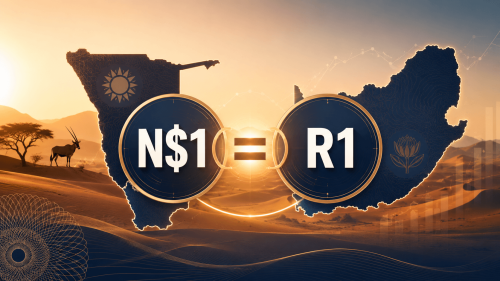
Since N$1 = R1, a ZAR-based exchange is naturally attractive to Namibian users.
The problem is banking infrastructure.
Changes to cross-border electronic payments within the Common Monetary Area have made ordinary EFT transfers between South African crypto exchanges and Namibian bank accounts more complicated.
AltCoinTrader has itself published information explaining how changes to CMA payment rules affected transfers involving Namibia, Lesotho and Eswatini.
Namibian users should therefore verify the exchange's current deposit and withdrawal options before assuming that a method which worked previously still works today.
VALR
VALR is another major South African crypto exchange and accepts international customers from many countries.
But its own banking guidance illustrates the main problem facing Namibians.
VALR states that cross-border payments involving Namibia through South Africa's BankServ EFT system are prohibited under the changed payment arrangements.
Namibian customers may be able to fund via SWIFT in certain circumstances, but VALR currently says it is unable to process fiat withdrawals directly to Namibian bank accounts.
This highlights the difference between being able to open or use a crypto account and having a convenient way of getting Namibia Dollars back into your bank.
Luno
Luno has long been one of southern Africa's best-known consumer crypto platforms and has historically been familiar to Namibian users.
Its systems have supported Namibia Dollar-related transfer methods in the past.
However, Luno has been restructuring the countries and regions in which it operates during 2026, including the closure of services in some markets from September 2026.
Namibia-specific availability and banking functionality should therefore be verified directly inside Luno before relying on it as a current NAD on-ramp or off-ramp.
Landifa
Landifa Bitcoin Trade is particularly interesting because it is Namibian and was one of the two businesses granted provisional VASP authorisation by BoN in January 2025.
Landifa has also been mentioned by Namibian crypto users looking for a way to buy or sell Bitcoin against local banking channels.
However, as noted above, consumers should distinguish between the original provisional authorisation and confirmation of a full operational licence.
The safest approach is to check the provider's current regulatory status directly with BoN before sending funds.
The real problem in Namibia is the on-ramp and off-ramp
For many experienced crypto users, buying, holding and transferring Bitcoin is relatively straightforward.
The difficult part in Namibia is often moving between:
NAD in a Namibian bank account ↔ cryptocurrency on an exchange or blockchain.
This is known as the fiat on-ramp and off-ramp.
A Namibian user may have no difficulty holding Bitcoin in a private wallet or trading BTC for USDT on an international exchange.
The challenge appears when that user wants to sell N$50,000 worth of crypto and receive the proceeds directly into a Namibian bank account.
Regulatory changes affecting cross-border payments within the Common Monetary Area have made some of the older South African exchange routes considerably less convenient.
This helps explain why local, properly licensed VASPs could eventually become important to Namibia's crypto market.
What about P2P crypto trading?
Peer-to-peer trading allows one person to buy cryptocurrency directly from another person, often through a marketplace operated by a larger exchange.
For example, one party may send Namibia Dollars or Rand to the seller's bank account while the platform holds the seller's cryptocurrency in escrow until payment is confirmed.
P2P can solve part of the banking problem, but users should understand that it creates different risks.
- Bank transfers can be fraudulent or reversed in certain circumstances.
- Users can be targeted by social-engineering scams.
- Transactions outside the platform's escrow system may have little protection.
- A user may unknowingly receive funds linked to fraud or criminal activity.
- Exchange-control, AML and tax obligations do not disappear simply because a transaction is P2P.
Users should therefore be particularly wary of moving a transaction from an established platform into WhatsApp, Telegram or another private communication channel.
Crypto does not bypass Namibian exchange-control law
This is another important misconception.
Bitcoin can technically cross a border without passing through SWIFT or a conventional banking system.
That does not mean Namibian residents can use cryptocurrency to ignore Namibia's financial laws.
The Bank of Namibia administers exchange controls governing the movement of capital and foreign currency into and out of Namibia.
The Bank specifically states that its Exchange Control division is responsible for monitoring cross-border currency flows, ensuring compliance and curbing illegal dealings in foreign currency.
Crypto changes the technology used to transfer value.
It does not automatically remove the legal obligations associated with the transaction.
What about stablecoins?
Stablecoins such as USDT and USDC are particularly relevant in countries where people want digital exposure to the US Dollar.
Unlike Bitcoin, whose price can move dramatically, these tokens are designed to remain close to US$1.
But they are still virtual assets.
Holding USDT is not the same thing as holding a US Dollar bank deposit, and a US Dollar stablecoin does not gain legal-tender status in Namibia merely because its value tracks the dollar.
Stablecoins also introduce risks connected to the issuer, reserves, custody and the blockchain network on which the token operates.
Does regulated mean safe?
No.
Regulation can reduce certain risks, particularly when it comes to custody, governance, cybersecurity and the handling of customer funds.
But the Bank of Namibia cannot guarantee the price of Bitcoin.
It cannot prevent an investor from buying a token that subsequently collapses in value.
And a BoN licence should never be interpreted as a government guarantee that a cryptocurrency investment will make money.
Investors still need to distinguish between:
- the risk of the cryptocurrency itself;
- the risk of the exchange;
- the risk of losing wallet credentials;
- the risk of scams and fraud; and
- the regulatory and tax consequences of a transaction.
Namibia appears to be taking a "regulate, don't ban" approach
The broader direction of policy is becoming increasingly clear.
Namibia does not appear to be attempting to eliminate crypto or financial technology.
Instead, the emphasis is on bringing innovation inside a regulated system.
In March 2026, the Bank of Namibia and NAMFISA announced a strengthened cooperation agreement and a joint technical working group aimed at supporting the responsible development of FinTech in Namibia.
BoN also operates an Innovation Hub through which FinTech companies can engage with the regulator about new financial products and technologies, including virtual assets.
That suggests a regulatory philosophy that could be summarised as:
Financial innovation is welcome — but it must operate within the rules.
So where does Namibia stand on crypto in 2026?
The simplest answer is this:
Crypto is not banned.
Namibians can own and trade virtual assets for their own account.
Crypto businesses are regulated.
Companies providing virtual-asset services in Namibia fall under the framework created by the Virtual Assets Act and the supervision of the Bank of Namibia.
Crypto is not legal tender.
Bitcoin does not have the legal status of the Namibia Dollar or South African Rand.
Businesses can voluntarily accept it.
A willing merchant and customer may agree to settle a transaction using cryptocurrency.
Access to international exchanges remains possible, but banking is complicated.
Platforms such as Binance, AltCoinTrader, VALR and others may be used by Namibian residents in different ways, but direct NAD deposits and withdrawals are not universally available and can change as banking and regulatory arrangements evolve.
And finally:
Being allowed to buy crypto does not mean the Bank of Namibia guarantees it, and being able to access an international exchange does not mean that exchange is licensed in Namibia.
Namibia has therefore moved well beyond the question of whether cryptocurrency should simply be banned or ignored.
The question now is how Bitcoin, stablecoins, exchanges and other digital assets can operate alongside the country's existing banking and monetary system without undermining consumer protection or financial stability.
In 2026, the answer appears to be clear:
Crypto can have a place in Namibia — but that place is increasingly regulated.
Note: This article reflects publicly available information as of 7 August 2026. Virtual-asset regulation, exchange availability and banking support can change quickly. Readers should verify the current licence status of any Namibian VASP directly with the Bank of Namibia before transferring funds. This article is for general information and does not constitute financial, investment, tax or legal advice.
Sources and Further Reading
- Bank of Namibia — Virtual Assets Act, 2023
- Bank of Namibia — Media Release on the Virtual Assets Act and the legal-tender status of virtual currencies
- Bank of Namibia — Provisional Authorisation Granted to Mindex Virtual Asset Exchange and Landifa Bitcoin Trade
- Bank of Namibia — Virtual Assets regulations covering custody, cybersecurity, capital requirements, risk management and client disclosures
- Bank of Namibia — National Payment System, Exchange Control and Virtual Asset Supervision
- Bank of Namibia and NAMFISA — 2026 FinTech cooperation agreement
- The Namibian — Central bank tests waters on crypto licences
- MINDEX — Current regulatory information for its Namibian virtual-asset operation
- VALR — Current guidance on deposits and withdrawals involving Namibian bank accounts
- AltCoinTrader — Common Monetary Area cross-border payment changes
POPULAR ARTICLES
View all