
Namibia's Sheep and Goat Industry Is at a Crossroads
The closure of the Farmers Meat abattoir in Mariental, rising costs in the goat trade and a new producer-led initiative have put a fundamental question before Namibia's small-stock farmers: who will take their animals to market — and where will the value be created?
For Namibia's sheep and goat farmers, August has brought an uncomfortable reminder of just how dependent livestock farming is on what happens after an animal leaves the farm.
On 18 August, Ohlthaver & List Group confirmed that the Farmers Meat abattoir at Mariental will permanently close, with final wind-down activities expected to be completed by the end of September.
The closure is significant far beyond the gates of the abattoir.
Farmers Meat describes the Mariental facility as Namibia's largest and only A-rated export facility for sheep, with approval to export Namibian lamb to markets including the European Union and Norway. Its closure therefore removes an important local route through which Namibian sheep could be slaughtered, processed and sold into higher-value international markets. Source: Farmers Meat
For producers, the question is no longer simply whether there is demand for Namibian sheep and goats.
There is.
The more difficult question is whether Namibia can build a livestock value chain that makes it commercially viable to process those animals at home.
Why is Farmers Meat closing?
The Mariental facility has had a difficult history.
After years of drought reduced sheep numbers in southern Namibia, operations were suspended in 2020. The abattoir resumed commercial operations in 2022 following investment by Hartlief and O&L, with the intention of rebuilding an export-oriented sheep industry.
But according to O&L, the operation has recorded losses every year since reopening.
For the financial year ending June 2026 alone, Farmers Meat is estimated to have lost N$26 million. O&L has attributed the situation to a combination of high livestock procurement costs, unfavourable exchange rates, limited access to premium export markets and international meat prices that have not been sufficient to cover production costs. Source: The Namibian
This is an important distinction.
The closure does not necessarily mean Namibia has too few sheep, or that nobody wants Namibian lamb.
In fact, official statistics show that sheep marketing has been growing strongly.
According to the Livestock and Livestock Products Board of Namibia (LLPBN), 447,299 sheep were marketed during the first half of 2026 — almost 40% more than during the same period in 2025. Slaughtering at export-approved abattoirs also increased during the period, while lamb and mutton exports rose by more than 60%. Source: LLPBN Q2 2026 Commentary
The problem is therefore more complicated than a lack of livestock.
It is a question of margins, market access, scale and where Namibia's animals ultimately go.
The pull of South Africa
Namibian farmers have one major alternative when local processing does not offer a competitive market: sell the animal alive.
And overwhelmingly, those animals move south.
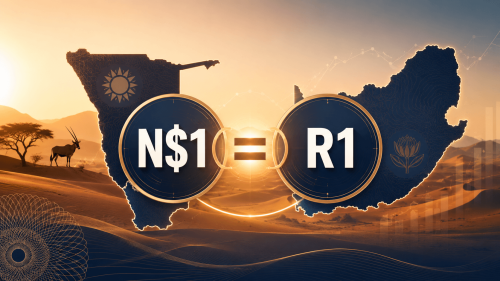
In June 2026 alone, Namibia exported 77,724 live sheep. South Africa took 75,901 of them — 97.7% of the total. Source: LLPBN Q2 2026 Commentary
Live exports play an important role in the industry. They give farmers another buyer, create competition for livestock and allow producers to sell even when local abattoir capacity is limited.
For an individual farmer, selling a sheep across the border may simply be the best commercial decision available.
But for Namibia as a whole, there is a trade-off.
When an animal leaves Namibia alive, much of the economic activity that follows it can leave as well: slaughtering, processing, packaging and some of the associated employment and value addition.
That tension has existed in Namibia's livestock industry for years. Farmers need the highest possible price for their animals, while Namibia also wants more of its agricultural products to be processed locally.
Achieving both at the same time is considerably harder than it sounds.
Farmers Meat's closure demonstrates why.
Local value addition only works if the business doing the value addition can remain profitable.
Goats face a different version of the same problem
The goat industry is even more dependent on live exports.
LLPBN statistics show that 47,286 goats were marketed during the first six months of 2026. Of these, 47,024 were exported alive, while registered goat abattoirs slaughtered just 262 animals.
That means local registered slaughter accounted for well below 1% of recorded goat marketing during the period. Source: LLPBN Q2 2026 Commentary
At the same time, getting those goats to export markets is becoming expensive.
The Namibia Agricultural Union recently estimated that exporting a goat to South Africa can cost around N$485 per animal once veterinary requirements, testing, documentation, transport, feed, labour and other expenses are taken into account.
According to the union, that is equivalent to roughly 30% of the average auction value of a goat. Source: Windhoek Observer
Animal-health controls are not optional inconveniences. Namibia's favourable animal-health status is one of the foundations on which its livestock export industry is built, and protecting that status is critical for access to foreign markets.
But compliance has an economic cost.
For smaller producers in particular, every additional cost between the farm gate and the final buyer reduces what can ultimately be paid for the animal.
Against this background, recent reports that a long-established Namibian goat exporter has decided to leave the business after decades in the trade have caused understandable concern among producers.
Whether one exporter leaves or not, however, the official figures already point to the underlying vulnerability: Namibia's goat sector depends heavily on being able to move live animals into regional markets at a competitive cost.
So what is the alternative?
Interestingly, sheep farmers were already asking that question before the permanent closure of Farmers Meat was announced.
On 22 July, more than 230 sheep producers met at a Livestock Producers Organisation indaba in Mariental and unanimously supported the establishment of a producer-driven company.
The proposed company is intended to increase farmers' participation in the sheep value chain, improve profitability at farm level, develop additional markets and create new value-addition opportunities.
Founder shares have been proposed at N$7,500 each, while Cirrus Capital has been appointed to investigate and help implement the structure. The initiative is also intended to be open to communal and emerging commercial producers. Source: Windhoek Observer
The idea is significant because Namibia has already begun testing a similar model in the cattle industry.
The Savanna Beef example
Savanna Beef was created as a producer-driven alternative in Namibia's beef industry.
The company has around 730 shareholders and has attracted hundreds of millions of Namibia dollars in investment. Earlier this year, its abattoir received certification to export beef to the United Kingdom, European Union and European Free Trade Association markets. Source: The Namibian
Its basic philosophy is straightforward: instead of merely producing cattle and selling them into a value chain controlled elsewhere, producers become shareholders in part of that value chain themselves.
That does not eliminate the risks of running an abattoir.
Savanna Beef still has to manage operating costs, secure sufficient throughput, meet demanding export standards, find profitable markets and compete internationally.
But it demonstrates that producer ownership is possible at a meaningful scale.
For Namibia's sheep farmers, that raises an obvious question: could the same model work for small stock?
Farmer ownership is not a magic solution
The timing of the proposed sheep company and the Farmers Meat closure makes the producer-owned model particularly interesting.
But it also makes one point impossible to ignore.
If a well-capitalised group such as O&L could not find a sustainable route to profitability at Mariental, changing the shareholders will not automatically change the economics.
A farmer-owned company would still have to buy sheep at prices attractive enough to persuade producers not to export them live.
It would still need sufficient and predictable throughput.
It would still face exchange-rate movements.
It would still need access to premium international markets.
And it would still have to sell every part of the carcass at prices high enough to cover slaughtering, processing, refrigeration, logistics, certification, labour and capital costs.
That may well be possible — but it requires a commercial model, not simply enthusiasm for local value addition.
Savanna Beef itself is evidence of both sides of the argument: producer ownership can mobilise substantial capital and create new processing capacity, but building a competitive export meat business is neither cheap nor easy.
More than an agricultural issue
What happens next matters beyond the farming community.
The Farmers Meat closure affects 102 workers — 19 permanent employees and 83 temporary employees — although Hartlief says it is investigating possible redeployment opportunities within the wider group. Source: The Namibian
There are also secondary effects.
An operating abattoir buys livestock, employs workers, uses transporters and service providers, pays for utilities and maintenance, and supports economic activity around the town in which it operates.
For a regional centre such as Mariental, losing a major processing operation therefore has implications beyond sheep prices.
The bigger economic issue is also familiar across Namibia's economy.
The country wants to move away from exporting raw or minimally processed products and retain more value locally. In mining, fishing and agriculture alike, "value addition" has become part of the national economic vocabulary.
The small-stock industry now provides a practical test of what that ambition requires.
It is not enough to have the raw product.
Local processing must also be competitive.
A crossroads for the industry
Namibia's sheep and goat farmers are not facing the disappearance of their industry.
There are still animals being produced, buyers in neighbouring countries and consumers willing to purchase Namibian meat.
But the structure connecting those farmers to those markets is under pressure.
For sheep producers, the closure of Farmers Meat removes a major export-processing route just as farmers are considering whether to take greater control of their own value chain.
For goat producers, live exports remain overwhelmingly dominant, while the costs of reaching those markets continue to eat into margins.
These developments leave Namibia with a choice that is easier to describe than to solve.
The country can continue relying heavily on exporting livestock alive, accepting that much of the downstream value will be created elsewhere.
Or producers, processors, government and investors can find ways to make more local processing commercially viable — not because local value addition sounds desirable, but because it can actually compete.
The proposed producer-owned sheep company may become part of that answer.
The closure at Mariental is a reminder of how difficult the question is.
Namibia's small-stock industry is not running out of sheep or goats.
It is searching for a sustainable way to turn them into value.
POPULAR ARTICLES
View all